
How To Manage Inventory In Excel For Small Businesses
How To Manage Inventory In Excel For Small Businesses - There are a lot of affordable templates out there, but it can be easy to feel like a lot of the best cost a amount of money, require best special design template. Making the best template format choice is way to your template success. And if at this time you are looking for information and ideas regarding the How To Manage Inventory In Excel For Small Businesses then, you are in the perfect place. Get this How To Manage Inventory In Excel For Small Businesses for free here. We hope this post How To Manage Inventory In Excel For Small Businesses inspired you and help you what you are looking for.
Inventory Management in Excel for Small Businesses
For small businesses just starting out, expensive inventory management software can be a daunting investment. Fortunately, Microsoft Excel provides a cost-effective and relatively simple solution to track your inventory and manage your stock levels. This guide will walk you through creating an effective inventory management system in Excel, covering essential aspects like setup, tracking, analysis, and optimization.
Setting Up Your Excel Inventory Sheet
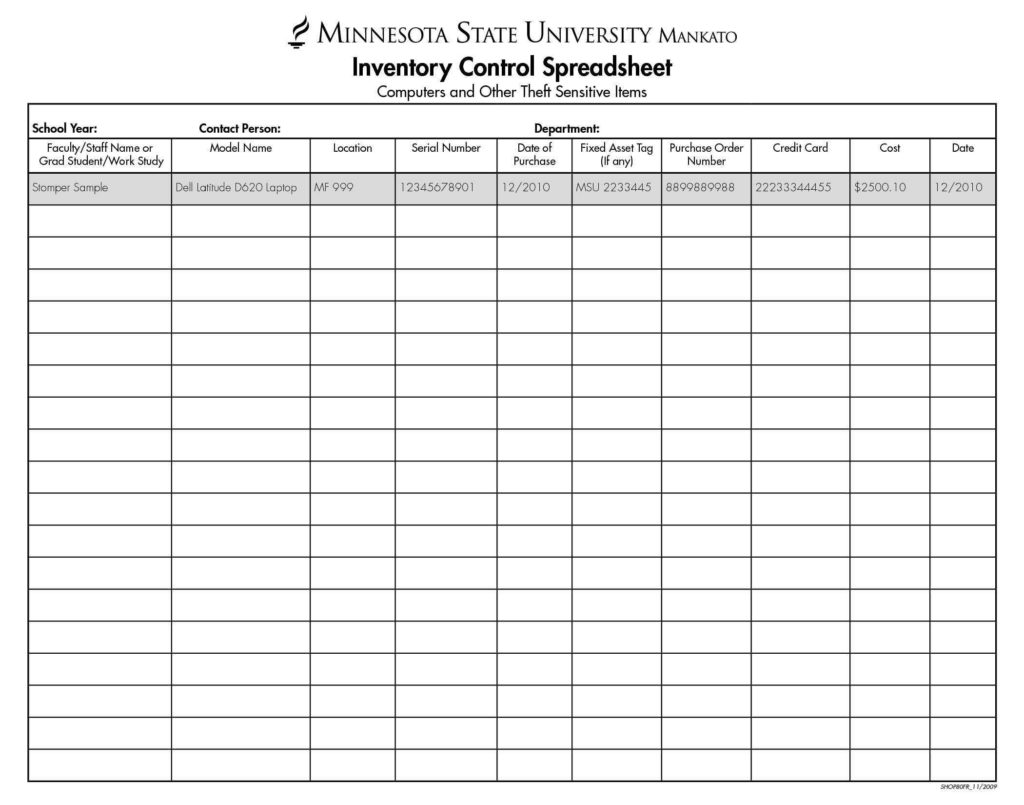
The foundation of your inventory system lies in a well-organized spreadsheet. Consider these key columns:
- Item ID (SKU): A unique identifier for each product. This is crucial for accurate tracking and reporting. Use a consistent naming convention (e.g., “SHIRT-RED-S”, “BOOK-SCI-101”).
- Item Name: A clear and concise description of the product.
- Category: Grouping items into categories (e.g., “Shirts”, “Books”, “Electronics”) simplifies reporting and analysis.
- Supplier: The name of the supplier providing the product.
- Unit Cost: The cost you pay per unit of the product.
- Selling Price: The price you sell the product for.
- Initial Stock: The quantity of the product you have in stock at the start of tracking.
- Reorder Point: The minimum stock level that triggers a reorder.
- Reorder Quantity: The ideal quantity to order when the stock reaches the reorder point.
- Date Received: The date the stock was received.
- Quantity Received: The number of units received.
- Date Sold: The date the stock was sold.
- Quantity Sold: The number of units sold.
- Current Stock: The calculated current stock level.
You can add more columns based on your specific needs, such as product dimensions, weight, warranty information, or location within your warehouse. Ensure the column headers are clearly labelled and formatted for easy understanding. Freeze the top row containing headers to keep them visible while scrolling.
Calculating Current Stock
A crucial function is automatically calculating your current stock level. Use this formula in the “Current Stock” column:
=Initial Stock + SUMIF(Date Received Column, "<>", Quantity Received Column) - SUMIF(Date Sold Column, "<>", Quantity Sold Column)
Replace “Initial Stock”, “Date Received Column”, “Quantity Received Column”, “Date Sold Column”, and “Quantity Sold Column” with the actual cell references for those columns in your spreadsheet. The `SUMIF` function sums the quantities received and sold based on whether a date is present (meaning a transaction occurred). This formula automatically updates the current stock level each time you record a purchase or sale.
Tracking Purchases and Sales
Maintain accurate records of all purchases and sales. For each purchase, record the date received, quantity received, and any other relevant information. Similarly, for each sale, record the date sold, quantity sold, and customer details (if needed). Consistent data entry is critical for maintaining the accuracy of your inventory records.
Consider creating separate sheets for “Purchases” and “Sales” to keep your main inventory sheet clean and organized. You can then use Excel formulas like `SUMIF` or `VLOOKUP` to link these sheets to your main inventory sheet and update the current stock automatically. For example, if you have a “Purchases” sheet with columns “Item ID” and “Quantity Received”, you could use the following formula in your inventory sheet to update the total quantity received for each item:
=SUMIF(Purchases!Item ID Column, [@[Item ID]], Purchases!Quantity Received Column)
Replace “Purchases!Item ID Column” and “Purchases!Quantity Received Column” with the correct column references. The `[@[Item ID]]` refers to the Item ID of the current row in the inventory sheet.
Setting Reorder Points and Quantities
Establishing reorder points and quantities is essential for avoiding stockouts and minimizing carrying costs. The reorder point is the stock level that triggers a new order, while the reorder quantity is the amount you should order.
To determine reorder points, consider these factors:
- Lead Time: The time it takes for a new order to arrive.
- Average Daily Sales: The average number of units sold per day.
- Safety Stock: Extra stock kept on hand to buffer against unexpected demand fluctuations.
A simple formula for calculating reorder point is:
Reorder Point = (Average Daily Sales * Lead Time) + Safety Stock
Calculate average daily sales by dividing total sales over a period (e.g., a month) by the number of days in that period. Determine safety stock based on your sales history and the variability of demand. Err on the side of caution to avoid stockouts, but avoid excessive safety stock to minimize carrying costs.
Reorder quantity depends on factors like supplier minimum order quantities, storage capacity, and potential discounts for bulk purchases. Analyze your sales data and supplier terms to determine the optimal reorder quantity.
Using Conditional Formatting for Alerts
Excel’s conditional formatting feature can help you quickly identify items that need reordering. Set up rules to automatically highlight cells in the “Current Stock” column based on their values. For example:
- Highlight in red if Current Stock is less than Reorder Point.
- Highlight in yellow if Current Stock is less than Reorder Point + (Reorder Quantity / 2).
To set up conditional formatting:
- Select the “Current Stock” column.
- Go to “Home” tab > “Conditional Formatting” > “New Rule”.
- Choose “Use a formula to determine which cells to format”.
- Enter a formula like `=E2<=H2` (assuming “Current Stock” is in column E and “Reorder Point” is in column H, and you are starting from row 2).
- Click “Format” and choose the desired highlighting color.
- Repeat for other conditions.
This visual cue will alert you to items requiring immediate attention.
Analyzing Inventory Data with Pivot Tables
Excel’s pivot tables are powerful tools for analyzing your inventory data and gaining valuable insights. You can use pivot tables to:
- Calculate total sales by category or supplier. This helps you identify your best-selling products and most reliable suppliers.
- Track inventory turnover rate. This measures how quickly you are selling your inventory, indicating the efficiency of your inventory management.
- Identify slow-moving items. This helps you identify products that are not selling well and may need to be discounted or discontinued.
- Analyze trends in sales and demand. This helps you forecast future demand and adjust your inventory levels accordingly.
To create a pivot table:
- Select your entire inventory data range.
- Go to “Insert” tab > “PivotTable”.
- Choose where to place the pivot table (e.g., a new worksheet).
- Drag and drop fields (column headers) into the “Rows,” “Columns,” “Values,” and “Filters” areas to create different analyses.
Experiment with different arrangements of fields to explore your data and uncover valuable insights. For example, drag “Category” to the “Rows” area and “Quantity Sold” to the “Values” area to see the total quantity sold for each category.
Regularly Updating and Maintaining Your Spreadsheet
The success of your Excel inventory management system depends on consistent and accurate data entry. Establish a regular schedule for updating your spreadsheet (e.g., daily or weekly). Train employees responsible for inventory management on proper data entry procedures. Periodically review your data for errors and inconsistencies. Perform physical inventory counts to verify the accuracy of your records.
Limitations and Considerations
While Excel is a useful tool for small businesses, it has limitations. As your business grows, you may need to transition to a more robust inventory management system with features like:
- Real-time inventory tracking: Integration with barcode scanners and point-of-sale systems for automatic updates.
- Multi-user access: Allowing multiple employees to access and update inventory data simultaneously.
- Advanced reporting and analytics: More sophisticated tools for forecasting demand and optimizing inventory levels.
- Integration with accounting software: Seamless integration with your accounting system for financial reporting.
Consider these limitations when deciding whether Excel is the right solution for your business. However, for many small businesses, a well-designed and diligently maintained Excel spreadsheet provides a cost-effective and manageable way to track inventory and improve operational efficiency.
 601×788 manage inventory excel db excelcom from db-excel.com
  474×364 small business inventory control template from myexceltemplates.com
  1275×1650 small business inventory spreadsheet product inventory sheet from db-excel.com
  1279×1654 inventory spreadsheet small business small business from db-excel.com
  2100×1275 small business inventory spreadsheet template db excelcom from db-excel.com
  1024×805 business inventory spreadsheet db excelcom from db-excel.com
  1600×898 inventory spreadsheet small business inventory management from db-excel.com
  1400×850 inventory spreadsheet small business ms excel worksheet from db-excel.com
  1900×1470 inventory spreadsheet small business small business inventory from db-excel.com
  1868×970 maintain store inventory excel elegant sales inventory from db-excel.com
  1282×691 small business inventory spreadsheet template worksheet from db-excel.com
  2105×1488 small business inventory spreadsheet template grosszugig from db-excel.com
  1200×928 inventory spreadsheet small business db excelcom from db-excel.com
 How To Manage Inventory In Excel For Small Businesses was posted in January 2, 2026 at 9:52 pm. If you wanna have it as yours, please click the Pictures and you will go to click right mouse then Save Image As and Click Save and download the How To Manage Inventory In Excel For Small Businesses Picture.. Don’t forget to share this picture with others via Facebook, Twitter, Pinterest or other social medias! we do hope you'll get inspired by ExcelKayra... Thanks again! If you have any DMCA issues on this post, please contact us!