
How To Use The Indirect Function In Excel For Dynamic References
How To Use The Indirect Function In Excel For Dynamic References - There are a lot of affordable templates out there, but it can be easy to feel like a lot of the best cost a amount of money, require best special design template. Making the best template format choice is way to your template success. And if at this time you are looking for information and ideas regarding the How To Use The Indirect Function In Excel For Dynamic References then, you are in the perfect place. Get this How To Use The Indirect Function In Excel For Dynamic References for free here. We hope this post How To Use The Indirect Function In Excel For Dynamic References inspired you and help you what you are looking for.
“`html
Unlocking Dynamic References in Excel with the INDIRECT Function
The INDIRECT function in Excel is a powerful tool that allows you to create dynamic references to cells or ranges. Instead of directly referring to a cell like `A1`, INDIRECT uses a text string to represent the cell address. This might seem convoluted at first, but it unlocks significant flexibility and automation in your spreadsheets, enabling you to build dynamic formulas that adjust based on changing conditions or user inputs.
The Basic Syntax of INDIRECT
The core syntax of the INDIRECT function is simple:
=INDIRECT(ref_text, [a1])- ref_text: This is the text string that represents the cell or range you want to reference. This can be a literal text string enclosed in double quotes (e.g., `”A1″`) or a cell containing a text string (e.g., `A2` where A2 contains `”A1″`).
- [a1]: This is an optional argument that specifies the referencing style.
- `TRUE` (or omitted): Interprets `ref_text` as an A1-style reference (e.g., “A1”, “B2:C5”). This is the default.
- `FALSE`: Interprets `ref_text` as an R1C1-style reference (e.g., “R1C1”, “R2C3:R5C2”). R1C1 refers to row 1, column 1.
Let’s look at a simple example. If cell A1 contains the value `10`, the following formulas will both return `10`:
=INDIRECT("A1") =INDIRECT(A1) // If A1 contains the text "A1" (e.g., `=CONCATENATE("A",1)`) While this example seems redundant, the real power of INDIRECT lies in its ability to construct `ref_text` dynamically.
Dynamic Sheet References
One of the most common uses of INDIRECT is to dynamically reference cells in different worksheets. Imagine you have multiple worksheets named “January”, “February”, “March”, and so on, each containing similar data. You want to create a summary sheet that automatically pulls data from the correct month’s worksheet based on a month selection. Here’s how you can do it:
- In a cell (e.g., A1) on your summary sheet, enter the month name (e.g., “January”).
- In another cell (e.g., B1) on your summary sheet, enter the cell you want to retrieve from that month’s sheet (e.g., “B5”).
- Now, use the following formula:
=INDIRECT("'" & A1 & "'!" & B1)Let’s break down that formula:
- `”‘” & A1 & “‘!”`: This constructs the sheet reference. The single quotes are necessary when the sheet name contains spaces or special characters. `A1` holds the sheet name (e.g., “January”). The exclamation mark separates the sheet name from the cell reference.
- `B1`: This provides the cell reference *within* the specified sheet (e.g., “B5”).
- The entire string is then passed to `INDIRECT`, which resolves it to the cell `B5` on the sheet named “January”.
If you change the value in A1 to “February”, the formula will automatically retrieve the value from cell B5 on the “February” sheet. This eliminates the need to manually update formulas every time you want to analyze data from a different sheet.
Dynamic Column and Row References
INDIRECT can also be used to dynamically specify column or row numbers within a worksheet. This is particularly useful when you have data organized in a tabular format and you need to access values based on changing column or row indices.
Suppose you have a table of product sales data, with product names in column A and monthly sales figures in subsequent columns (B, C, D, etc.). You want to create a formula that retrieves the sales figure for a specific product and a specific month, where the month is selected by its column number.
- In a cell (e.g., A1), enter the product name (e.g., “Widget A”).
- In a cell (e.g., B1), enter the column number representing the month you want to retrieve (e.g., 3 for March, assuming January is column B).
- Use the following formula:
=INDIRECT(ADDRESS(MATCH(A1,A:A,0),B1))Here’s what’s happening:
- `MATCH(A1,A:A,0)`: This finds the row number where the product name in A1 (e.g., “Widget A”) appears in column A. The `0` specifies an exact match.
- `ADDRESS(MATCH(A1,A:A,0),B1)`: This function constructs a cell address string based on the row number found by `MATCH` and the column number specified in B1. For example, if “Widget A” is found in row 5 and B1 contains `3`, then `ADDRESS` will return `”C5″`.
- `INDIRECT(ADDRESS(MATCH(A1,A:A,0),B1))`: Finally, INDIRECT takes the cell address string `”C5″` and returns the value in that cell.
Changing the column number in B1 will dynamically update the formula to retrieve sales data from the corresponding month for the selected product.
Using R1C1 Notation with INDIRECT
As mentioned earlier, the optional `a1` argument in INDIRECT allows you to use R1C1 notation. R1C1 notation refers to cells based on their row and column numbers. For instance, `R1C1` refers to the cell in the first row and first column (equivalent to A1 in A1 notation). `R[1]C[2]` refers to the cell one row below and two columns to the right of the cell containing the formula.
To use R1C1 notation, set the `a1` argument to `FALSE`:
=INDIRECT("R2C3", FALSE) // Returns the value in the second row, third column (C2)A more useful example is to create a relative reference using R1C1:
=INDIRECT("R[1]C", FALSE) // Returns the value in the cell one row below in the same column.This formula, when placed in cell A1, would return the value of cell A2. It’s a relative reference, so if copied to cell B1, it would return the value of cell B2.
Dynamic Range Selection
INDIRECT can also create dynamic range references. For example, you can sum a range of cells where the starting and ending cells are determined by other cells in the spreadsheet.
- In a cell (e.g., A1), enter the starting cell address (e.g., “B2”).
- In a cell (e.g., B1), enter the ending cell address (e.g., “B10”).
- Use the following formula to sum the dynamic range:
=SUM(INDIRECT(A1&":"&B1))This formula concatenates the starting and ending cell addresses with a colon to create a range string (e.g., “B2:B10”), which is then passed to INDIRECT. The SUM function then calculates the sum of the cells within that dynamic range.
Common Errors and Pitfalls
While INDIRECT is powerful, it’s crucial to be aware of its potential pitfalls:
- Volatile Function: INDIRECT is a volatile function, meaning it recalculates whenever *any* cell in the spreadsheet changes, even if the INDIRECT formula itself isn’t directly affected. This can significantly slow down large or complex spreadsheets. Use it judiciously.
- String Construction Errors: Carefully double-check the construction of your `ref_text` string. Typos or incorrect concatenation can lead to `#REF!` errors. Using the `Evaluate Formula` tool can help debug complex INDIRECT formulas.
- Circular References: Avoid creating circular references where a cell indirectly refers to itself, as this can lead to unpredictable results.
- Error Handling: If the `ref_text` string is invalid or refers to a non-existent cell, INDIRECT will return a `#REF!` error. You can use `IFERROR` to handle these errors gracefully.
Alternatives to INDIRECT
While INDIRECT is useful, consider these alternatives, especially in newer versions of Excel, as they are often non-volatile and more efficient:
- INDEX and MATCH: These functions are often a superior alternative for dynamic lookups, especially for row and column selection. They are non-volatile.
- OFFSET: While OFFSET can be used to create dynamic ranges, it is also volatile.
Conclusion
The INDIRECT function is a valuable tool for creating dynamic references in Excel, allowing you to build more flexible and automated spreadsheets. By understanding its syntax, capabilities, and limitations, you can leverage its power to streamline your data analysis and reporting tasks. Remember to use it responsibly, being mindful of its volatility and potential for errors, and consider alternatives like INDEX/MATCH when appropriate.
“`
 934×642 indirect function excel excelbuddycom from excelbuddy.com
  1301×586 excel indirect function excelfind from excelfind.com
  1024×483 excel indirect function myexcelonline from www.myexcelonline.com
 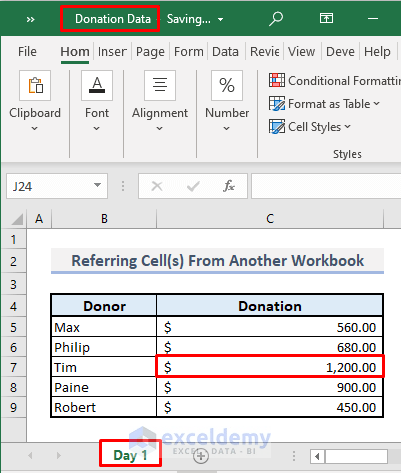 401×473 indirect function excel examples from www.exceldemy.com
  909×1043 indirect function excel values reference excel unlocked from excelunlocked.com
  1024×582 indirect function excelnotes from excelnotes.com
  465×202 excel indirect function excel vba from www.exceldome.com
  400×215 indirect dynamically reference cell excel aj from www.articlejobber.com
 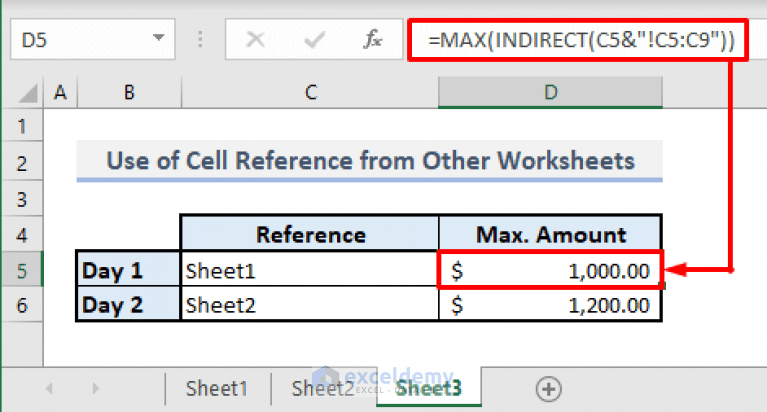 767×412 indirect function excel suitable instances from www.exceldemy.com
  697×388 excel indirect function microsoft excel tutorials from www.myexcelonline.com
  1405×527 excel indirect function complete guide from excelsirji.com
  1280×720 excel indirect function earn excel from earnandexcel.com
 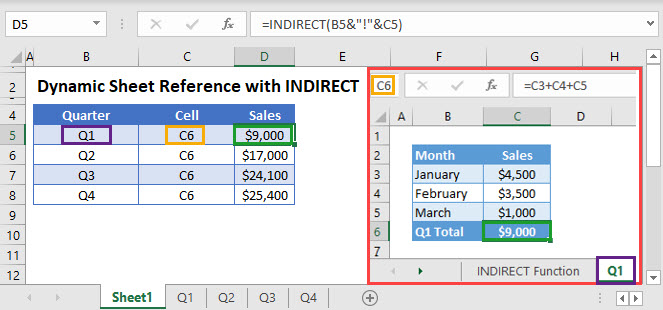 663×310 dynamic sheet reference indirect excel google sheets from www.automateexcel.com
 :max_bytes(150000):strip_icc()/excel-indirect-function-580bb7145f9b58564cf69f6f.jpg) 1153×661 learning excel indirect function from www.lifewire.com
1153×661 learning excel indirect function from www.lifewire.com How To Use The Indirect Function In Excel For Dynamic References was posted in December 11, 2025 at 4:29 am. If you wanna have it as yours, please click the Pictures and you will go to click right mouse then Save Image As and Click Save and download the How To Use The Indirect Function In Excel For Dynamic References Picture.. Don’t forget to share this picture with others via Facebook, Twitter, Pinterest or other social medias! we do hope you'll get inspired by ExcelKayra... Thanks again! If you have any DMCA issues on this post, please contact us!